A Mansion Steeped in Late-Qing Legacy
Nestled in Hangzhou's ancient Shangcheng District, the Former Residence of Hu Xueyan stands as China's largest and most intact late-Qing merchant mansion and a pinnacle of Jiangnan architecture. Built between 1872 and 1875, this 5,800㎡ estate was the private domain of Hu Xueyan (1823–1885), the legendary "Red-Topped Merchant"—a self-made tycoon, imperial court official, and the iconic face of 19th-century Zhejiang merchant culture.
Why Hangzhou? The Soul of a Merchant Empire
Hangzhou was not merely Hu's hometown but the nerve center of his business empire, blending southern prosperity and imperial influence. This residence is far more than a mansion: it is a living museum of late-Qing social hierarchy, Jiangnan craftsmanship, and Sino-Western cultural integration, mirroring the rise and fall of a tycoon and an era.
Architectural Essence: Jiangnan Elegance Meets Global Luxury
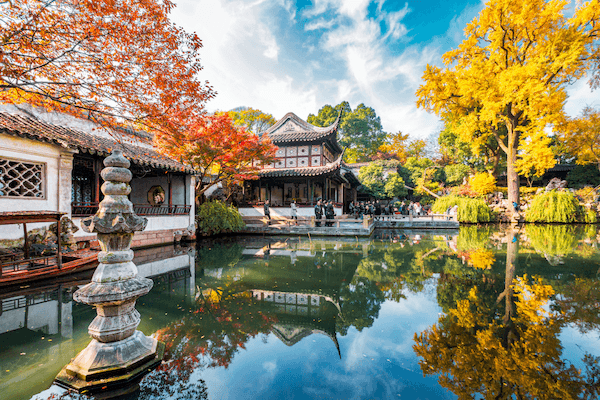
A masterpiece of Jiangnan white-wall-black-tile aesthetics, the mansion features symmetrical layout, carved beams, painted rafters, winding covered corridors, and classical gardens. What makes it extraordinary is its rare Sino-Western fusion: French stained glass, Italian marble, and imported European furnishings coexist with traditional Chinese woodcarving, brick carving, and stone carving—an unparalleled reflection of Hu's global vision and unprecedented wealth.
Layout Overview
Designed with a rigorous east-west symmetrical axis that follows traditional Chinese feudal architectural etiquette and spatial hierarchy, the entire mansion is scientifically divided into three functionally independent yet aesthetically integrated core zones. Each area features unique architectural styles, cultural connotations and sightseeing values, covering official etiquette, leisure aesthetics and private family life, fully presenting the complete lifestyle and status of a top late-Qing merchant family:
- Central Mansion (Cultural & Ceremonial Core): The most solemn and prestigious core area of the entire estate, serving as the official reception and business negotiation center. This zone undertakes the political and social functions of the mansion, where Hu Xueyan received imperial officials, noble guests and business partners. It houses the mansion's most precious cultural relics, exquisite Huizhou wood carvings, and rare Sino-Western integrated decorative artworks, perfectly showcasing Hu's dual identity as a court official and a leading national tycoon. It is the core area for exploring the mansion's historical heritage and architectural craftsmanship.
- Eastern Garden (Leisure & Aesthetic Core): A classic private Jiangnan garden built for relaxation and entertainment, breaking the solemn atmosphere of the ceremonial area. Adopting traditional Chinese garden techniques of borrowing scenery, stacking stones and creating waterscapes, it features lotus ponds, curved stone bridges, layered rockeries and elegant waterside pavilions. This quiet, poetic leisure space was used by Hu Xueyan for tea tasting, poetry appreciation and private gatherings, embodying the elegant aesthetic and seclusion philosophy of Jiangnan scholar-merchants, and serving as the best photography and relaxing area in the mansion.
- Western Living Quarters (Private Life Core): The exclusive private living area for Hu Xueyan's family, strictly divided from the public ceremonial area in line with ancient feudal ethical norms. This well-preserved residential zone includes master bedrooms, female family quarters and ancestral halls, retaining authentic late-Qing furniture, daily utensils and decorative layouts. It intuitively reproduces the daily life, family etiquette and hierarchical system of elite merchant families in the late Qing Dynasty, allowing visitors to gain an in-depth understanding of the private family culture behind the legendary red-topped merchant.
This professional guide systematically sorts out the hidden architectural details, profound historical narratives, precious cultural relic backgrounds and exclusive local travel tips of the mansion, helping every visitor avoid superficial sightseeing and achieve a comprehensive, in-depth and immersive cultural exploration of Hu Xueyan's former home.
This guide unlocks hidden craftsmanship, untold historical narratives, and insider tips for an immersive, in-depth exploration of Hu Xueyan's former home.
Top Highlights of Former Residence of Hu Xueyan
Central Mansion: The Epitome of Wealth & Status
Vibe & Orientation
Serving as the absolute cultural, historical, and architectural core of the entire Hu Xueyan's mansion complex, the Central Mansion features a stately, dignified, and well-structured imperial-style architectural layout that perfectly reflects the supreme social status and immense wealth of Hu Xueyan, the renowned late-Qing “Red-Topped Merchant”. Different from ordinary Jiangnan civilian residences, this core ceremonial zone strictly follows traditional Chinese feudal architectural etiquette and symmetrical spatial aesthetics, boasting grand open courtyards, towering wooden beam structures, and meticulously crafted ancient decorative details. Fully preserved with a large number of first-class cultural relics, rare hand-carved artworks, and exclusive Sino-Western integrated decorative treasures that are rarely seen in other ancient mansions, this area carries the most crucial historical stories and cultural heritage of the entire scenic spot. It is an unmissable core sightseeing zone tailored for professional history researchers, architectural art connoisseurs, cultural heritage enthusiasts, and in-depth travelers who pursue high-quality cultural exploration experiences.
Main Hall (Hall of Benevolence & Righteousness)
As the most supreme and representative ceremonial hall of the entire mansion, this grand hall serves as the highest-standard reception space where Hu Xueyan greeted Qing Dynasty imperial officials, senior nobles, top business partners, and distinguished national guests. It is the symbolic core that witnesses Hu's peak political status and commercial dominance, boasting the most luxurious architectural specifications among all private merchant mansions in Jiangnan region.
Deep Details: Entirely constructed with rare high-quality natural red sandalwood—a precious wood that was exclusive to royal families in ancient China—the hall features fully gilded gold-leaf rafters and carved beams that shimmer under soft light, presenting an unparalleled luxurious and solemn atmosphere. The iconic 6-meter-tall solid sandalwood screen carved with the exquisite Hundred Virtues Diagram is the hall's star highlight, perfectly interpreting Hu Xueyan's core business philosophy of "benevolence and integrity as the foundation of wealth". Displayed with authentic imperial calligraphy relics and a high-restoration replica of Hu's exclusive red-topped official hat and court robe accessories, this space vividly showcases his rare dual identity of “court official and top tycoon”. It is the must-visit spot for capturing the mansion's noble status and shooting high-end ancient architectural photos.
Huizhou Woodcarving Gallery: Peak of Traditional Craftsmanship
Commonly overlooked by hurried casual tourists, this hidden gallery houses a full collection ofmuseum-level Huizhou woodcarving artworks, all preserved in perfect original condition. Originating from Hu Xueyan's ancestral Huizhou area, these carvings represent the highest craftsmanship standard of late-Qing folk wood art and are hailed as “living cultural relics of Chinese traditional carving”.
- Deep Highlights & Tourist Value: The gallery's biggest highlight is the rare hollow double-sided openwork carving technology, a top-tier intangible cultural heritage skill that cannot be replicated by modern machines. Every carving is completely symmetrical on both sides with zero redundant lines or flawed details. The vivid patterns cover auspicious flowers and birds, divine dragons and phoenixes, as well as classic Chinese folk legends including The Legend of the White Snake and historical virtue stories. Each delicate artwork took senior master craftsmen 3–6 months of pure manual polishing to complete. Tourists can closely observe the millimeter-level delicate carving details, appreciate the superb wisdom of ancient Chinese craftsmen, and shoot ultra-textured close-up art photos. It is a paradise for craft lovers and cultural photography enthusiasts.
Sino-Western Decor Art Exhibition
This exclusive exhibition area is the most powerful physical proof of Hu Xueyan's advanced global vision and cross-border business layout in the 1870s. Unlike traditional pure-Chinese ancient mansions, this mansion integrates authentic European luxury decorations, making it the only well-preserved Sino-Western fusion merchant mansion in Hangzhou and a precious witness to early Sino-European cultural and trade exchanges.
- Deep Highlights & Tourist Value: The star attraction is the authentic French hand-painted stained glass windows, specially imported from Europe in the 1870s. At that time, this kind of colored glass was extremely luxurious and exclusive, which ordinary royal manors and civilian residences could never afford. The delicate floral and geometric light-transmitting patterns filter soft colorful natural light into the ancient wooden rooms, creating a dreamy, retro and exotic visual effect that is extremely rare in Chinese ancient architecture. Matched with high-grade Italian marble railings, hand-glazed ancient tiles, and noble jade-inlaid solid wood furniture, the perfect collision of Eastern classical elegance and Western romantic luxury brings tourists a stunning cross-era visual shock. This is the most distinctive check-in spot of the entire mansion and a unique shooting location for vintage exotic style photos.
Permanent Themed Exhibitions
- Hu Xueyan Life Chronicle Gallery: This immersive exhibition hall collects a large number of unpublished precious old photos, original handwritten account books, and official historical documents, perfectly reproducing Hu Xueyan's legendary life trajectory from a poor orphan bank apprentice to a top national tycoon with imperial honors. Combined with vivid scene wax figure displays, tourists can intuitively understand his 30-year ups and downs in business, his unique business strategies, and the rise and fall of the late-Qing merchant economy. It is an essential spot for in-depth historical learning.
- Treasure Chamber: Restored and displayed with high-simulation replicas of Hu Xueyan's top private collections, including pure gold ingots, high-quality jade ornaments, official kiln porcelain, and hand-woven silk tapestries. It intuitively shows his terrifying peak wealth of over 30 million taels of silver, which was equivalent to one-third of the national fiscal revenue of the late Qing Dynasty. Tourists can truly feel the luxury and status of the top “red-topped merchant” and understand the wealth culture of ancient Chinese merchant groups.
- Ancient Study & Business Office: Fully restored according to the original layout, this quiet study preserves complete ancient literary and business supplies: premium ink stones, wolf-hair writing brushes, ancient ledgers and business archives. Different from the public stereotype of “rich but uneducated merchants”, this exhibition fully shows Hu Xueyan's profound literary accomplishment, rigorous business management system and forward-looking business thinking. Tourists can experience the working scene of a top ancient Chinese merchant and learn his timeless business wisdom.
Eastern Garden: Jiangnan Garden Aesthetics in Miniature
Vibe & Orientation
A stark contrast to the solemn Central Mansion, the Eastern Garden is a serene classical Jiangnan garden—lush, poetic, and tranquil. Ideal for leisurely strolls, landscape photography, and appreciating traditional Chinese garden design philosophy.
Core Highlights:
Lotus Pond & Curved Stone Bridge: A 200㎡ lotus pond with clear water, crossed by a bluestone arch bridge. In summer, blooming lotus flowers and willow reflections create a poetic Jiangnan scene, embodying the Chinese aesthetic of "harmony between man and nature".
Rockery Hill & Hidden Caves: A 10m-high artificial rockery piled with Taihu stones, with winding caves, pavilions, and rare bonsai. Designed for quiet meditation and escape from the hustle, it reflects the scholar-official's pursuit of seclusion.
Pavilion of Tranquility: A waterside pavilion with carved railings, offering unobstructed views of the entire garden. It was Hu's favorite spot for tea tasting, poetry recitation, and private conversations.
How to Visit Efficiently
For travelers with limited time, prioritize the Central Mansion and Eastern Garden—the most representative zones.
Area | Core Value | Deep Experience | Best For |
Central Mansion (Top Pick) | Historical relics + Sino-Western architectural fusion | Study woodcarving craftsmanship, decode Hu's dual identity | History buffs, architecture lovers, culture scholars |
Eastern Garden | Jiangnan garden aesthetics + natural tranquility | Appreciate “borrowed scenery” design, relax by the lotus pond | Photographers, relaxation seekers, nature lovers |
Western Living Quarters | Late-Qing elite family life & social norms | Understand feudal family hierarchy and daily rituals | Cultural anthropologists, lifestyle explorers |
How to Get to Former Residence of Hu Xueyan
Located in Hangzhou's old town, the residence is easily accessible via public transit, taxi, or walking—with charming old-town scenery along the way.
Public Transport (Most Recommended)
· Bus: Take Bus 8, 30, 60, or 195 → alight at Hu Xueyan Former Residence Station. A 2-minute walk through bluestone lanes leads directly to the entrance.
· Metro: Line 1 → Ding'an Road Station, Exit C. A 10-minute leisurely walk through Shangcheng Old Lanes (lined with ancient houses and local snack shops) immerses you in authentic Hangzhou old-town vibes.
Taxi & Private Car
· Navigation: Search Former Residence of Hu Xueyan for precise positioning.
· Parking Note: On-site parking is extremely limited. Avoid private cars on weekends/holidays due to severe old-town traffic congestion.
Secret Walking Route (For Slow Travelers)
Stroll from Qinghefang Ancient Street → through Shisi Ku Xiang (a 600-year-old historic lane) → to the mansion. The route winds through Ming-style houses, old teahouses, and local handicraft shops, offering an immersive experience of Hangzhou's ancient merchant culture.
Travel Pain Point Solution & Quick Transport Guide
Most travelers struggle with traffic jams, high travel costs and inappropriate route choices. Below is a simple, targeted summary to help you pick the best transport in one second:
1. Most Cost-Effective (Budget Pick) — Public Transport
Perfect for solo travelers and backpackers. Zero traffic congestion, no parking fees, and the cheapest option. It covers all mainstream routes and lets you experience local daily commuter vibes.
2. Most Convenient (Time-Saving Pick) — Taxi & Private Car
Ideal for families, senior travelers and group visitors. Door-to-door service saves walking time and physical strength. Please avoid private cars on weekends and holidays to skip old-town traffic jams.
3. Most Scenic & Immersive (Experience Pick) — Secret Walking Route
Best for photography lovers and slow travelers. Avoid crowded main roads, enjoy ancient lane scenery and connect the attraction with Qinghefang Ancient Street for a one-stop cultural tour.
Best Photography Spots: Capture Timeless Jiangnan Charm
Blending grand architecture, intricate craftsmanship, and poetic gardens, the mansion is a paradise for photography—no filters needed for stunning shots.
· Central Mansion Main Courtyard (9:00–10:00 AM): Symmetrical white walls, black tiled roofs, and ancient stone steps under soft morning light create minimalist, elegant shots with strong Chinese aesthetics.
· Woodcarving Corridor (10:30–11:30 AM): Gentle diffused indoor light highlights the intricate details of double-sided openwork carvings, perfect for artistic still-life photography with rich texture.
· Eastern Garden Lotus Pond (4:00–5:00 PM): Golden sunset light reflects on the calm water, with stone bridges and pavilions framed by willow branches—ideal for dreamy, warm-toned landscape shots.
· Waterside Pavilion (All Day): Framed by green foliage and lotus flowers, the pavilion offers panoramic garden views, capturing the poetic charm of Jiangnan's “water, stone, and pavilion”.
6. Practical Visiting Tips & Ticket Booking & Pro Tips
Common Mistakes to Avoid
· Rushing the visit: Allocate 2.5–3 hours for a thorough exploration. Hidden details (e.g., small carved inscriptions, glass patterns) are easily missed in a hurry.
· Visiting at noon on weekends: Crowds peak at 11:30 AM–2:00 PM, disrupting the mansion's quiet historic atmosphere and affecting photo quality.
· Wearing high heels: The mansion has uneven stone steps and winding lanes—comfortable flat shoes are essential for easy walking.
Key Visiting Tips & Foreign Visitor Ticket Guide
· Early bird visit: Arrive before 9:00 AM for sparse crowds and soft golden morning light, perfect for sightseeing and unobstructed photography.
· Free guided tours: Join 1-hour free official tours at 10:00 AM and 2:00 PM daily. Led by professional historians, the tours reveal untold stories of Hu Xueyan's life and the mansion's hidden craftsmanship.
· Weather-based itinerary: On rainy/cloudy days, focus on the Central Mansion (soft diffused light enhances indoor relic viewing); on sunny days, prioritize the Eastern Garden for vibrant natural scenery.
Ticket Booking for Foreign Visitors
Foreign travelers can book tickets via official international platforms: Hangzhou Cultural Tourism Official Website, Trip.com, Klook, or Ctrip International. A valid passport is required for online booking and on-site verification.
On-site ticket purchase is available at the mansion's ticket booth, but peak seasons (April–October, holidays) often sell out quickly, with limited walk-up tickets.
Professional Reservation Assistance
If you face language barriers or complex booking procedures (e.g., group bookings, peak-period reservations), contact us directly. We provide one-stop ticket reservation services for foreign tourists—including advance booking, passport verification, and priority entry arrangements—ensuring a smooth, hassle-free visiting experience.
Outfit Suggestion
· Clothing: Light-colored linen, Han-style, or cheongsam outfits. The simple, elegant tone perfectly matches the mansion's Jiangnan architectural style and enhances photos.
· Accessories: A delicate folding fan, silk scarf, or traditional hairpin as props to elevate classical artistic vibes.
What to Eat & Buy Nearby
Nestled in Hangzhou's old town, the mansion has limited on-site dining. These handpicked nearby spots offer authentic local meals and cultural souvenirs for a relaxing pit stop.
Nearby Shopping
· Qinghefang Ancient Street (5-min walk): A 1,000-year-old commercial street selling silk products, Longjing tea, Huizhou carvings, and Hangzhou-style handicrafts. Ideal for buying cultural souvenirs and gifts.
· Wushan Plaza (10-min walk): A comprehensive mall with daily supplies, bubble tea shops, and casual dining, meeting all daily shopping needs.
Local Restaurant Recommendations
Fang Laoda Noodle House (Jiangcheng Road Branch)
Distance: 800 meters on foot from the Former Residence of Hu Xueyan, 10-minute leisurely walk
Address: Jiangcheng Road No.629, Shangcheng District, Hangzhou
Opening Hours: 07:00–20:00 daily
Average Cost: CNY 45 per person
Environment: A time-honored local noodle shop loved by locals for decades. Featuring a simple, clean casual dining atmosphere with traditional Hangzhou street food vibes, it avoids overly commercial decoration and focuses on authentic traditional flavors. It is the perfect spot for a quick, hearty meal after sightseeing.
Signature Dishes: Hangzhou Braised Pork Noodles (tender fatty pork with savory thick sauce, paired with chewy handmade noodles), Shrimp & Scallion Oil Noodles (fresh and fragrant with pure natural scallion aroma), and seasonal vegetable side dishes. All dishes feature light, authentic Hangzhou taste without heavy seasoning.
Fuyuanju Restaurant (Hefang Street Branch)
Distance: 900 meters on foot from the Former Residence of Hu Xueyan, 12-minute casual walk
Address: Hefang Street, Shangcheng District, Hangzhou
Opening Hours: 10:30–21:30 daily
Average Cost: CNY 85 per person
Environment: A classic time-honored Hangzhou cuisine restaurant nestled in the ancient Hefang Street. Decorated with traditional wooden furnishings, antique lanterns and Jiangnan-style courtyard layouts, it boasts an elegant and antique ambiance. Blending ancient street scenery and traditional catering culture, it offers an immersive local dining experience for tourists.
Signature Dishes: Osmanthus Glutinous Rice Cake (sweet and soft with lingering osmanthus fragrance), Traditional Hangzhou Braised Dishes, Crispy Fried Shrimp and Homemade Tofu. It specializes in authentic folk-style Hangzhou cuisine, favored by both locals and foreign tourists for its mild and delicate flavor.
Final Verdict
The Former Residence of Hu Xueyan is far more than a historic mansion—it is a cultural landmark that encapsulates late-Qing merchant civilization, Jiangnan architectural art, and Sino-Western cultural integration. Away from West Lake's crowds, it offers a quiet, profound journey into the life of a legendary tycoon and the glory of an era.
Whether you are a history enthusiast, architecture connoisseur, cultural traveler, or photography lover, this hidden gem delivers an immersive, unforgettable experience. Slow down, trace the carved beams, feel the centuries-old history, and embrace the timeless charm of Hu Xueyan's former home—a true treasure of Hangzhou.