Most people don't dislike Lingyin Temple because it's "overrated." They dislike it because they visited it the wrong way. They arrive at noon, walk straight into the temple, rush through in 30 minutes, and leave feeling underwhelmed. But here's the thing most guides don't tell you: The best part of Lingyin isn't even inside the temple. If you understand the layout, timing, and pacing, this can easily become one of the most memorable places in Hangzhou. This guide will show you exactly how to visit Lingyin Temple and Feilai Feng properly — without the crowds.
Essential Things to Know Before Visiting Lingyin Temple & Feilai Feng
Location: Lingyin Scenic Area sits on the west side of West Lake, surrounded by forested hills. It feels far from the city, but it's actually only about 20–30 minutes by taxi from West Lake.
Opening Hours:
Feilai Feng: 7:30 – 17:30 (last entry 17:00)
Lingyin Temple: 6:30 – 18:00 (last ticket 17:30)
Local Tip: Early morning means moist air, light breeze, and almost no heavy incense smell. It's the best time to visit.
Ticket & Reservation System
From December 1, 2025, Lingyin Temple is 100% free but uses a real?name + time?slot reservation system. No reservation = no entry.
Reservation Platform: Search "杭州灵隐飞来峰" on WeChat Mini Program or Alipay Mini Program
Booking Time: Releases 8:00 AM daily; you can book 1–7 days in advance
What's included: One reservation covers both Feilai Feng Scenic Area and Lingyin Temple—no extra tickets or separate booking needed
Local Tip: Book early, especially weekends and holidays—same?day slots are almost always full
Time Needed
Feilai Feng alone: 1+ hours (if you walk slowly and take photos)
Full visit: 2–4hours total
Walking Difficulty: Moderate. Lots of stone steps; some sections get slippery early morning or after rain.
How to Get There:
Roads around Lingyin are very narrow. Traffic control starts at 8:00 AM—tour buses and ride?hailing cars cannot enter the nearby area after 8 AM.
Option 1: Taxi / Didi (Best if you arrive before 8:00 AM)
Directly set destination to: Lingyin Department Store/ KFC (Lingyin) /Starbucks (Lingyin). All are a 2–5 minute walk to the temple gate.
Option 2: Taxi / Didi (AFTER 8:00 AM — Must Transfer)
Set your destination only to:
Xixi Road 608 Parking Lot
Lingyin Road 32 Parking Lot
Then take the scenic shuttle bus (2 yuan/person) to the entrance. This avoids jams completely.
Option 3: Bus & Metro (Most Reliable)
Take buses 7, 278, 103, 1314 or special Lingyin lines to Lingyin Bus Terminal or Lingyin East Station. From West Lake / city center: Take Metro Line 1 or 3 to nearby stations, then transfer to a Lingyin?direct bus
Option 4: Quiet Back Route via Amanfayun (Local Secret)
There's a lesser-known way to approach Lingyin — through the area around Amanfayun.
This area connects to the Lingyin scenic zone, much quieter than the main entrance
Important Notes: This is not a formal main entrance route, if you happen to be staying in the nearby area, you may take this route.
Practical Tips:
Free incense: You can receive 3 sticks for free inside the temple (don't buy at the entrance)
Mosquitoes: It's in the mountains — bring repellent
Shoes: Wear something with grip (stone steps can be wet)
Exploring Feilai Feng: What You Shouldn't Miss
If you only remember one thing about Lingyin: Don't rush through Feilai Feng. Because in many ways, this is where the real experience begins.
What Feilai Feng Actually Is
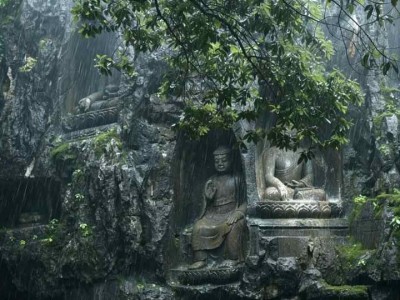
Feilai Feng (literally "Peak Flown from Afar") is not just a scenic path —it's a living gallery of Buddhist stone carvings carved into limestone cliffs. It is a mountain covered in 10th–14th century Buddhist stone carvings—one of China's most underrated art treasures. is a mountain covered in 10th–14th century Buddhist stone carvings—one of China's most underrated art treasures.
What Makes It Special:
Nature and religion blend perfectly here. Mossy cliffs, clear streams, and ancient Buddha statues create a Zen vibe you won't feel inside the busy temple.
Must-See Highlights
There are hundreds of carvings, but a few stand out as absolute highlights. If you're short on time, make sure you find these:
Big Belly Maitreya Buddha —Right near the entrance — and impossible to miss.
This Southern Song statue has a big smile and round belly—super healing and the most popular photo spot. It's the symbol of Feilai Feng, often called the "face" of Feilai Feng
Local tip: Come early if you want a clean photo — this spot gets crowded fast.
Qinglin Cave("Tiger Cave") — A surprisingly fun stop, especially if you've seen old Chinese TV.
Famous as the home of Zhu Bajie in the 1986 Journey to the West. Inside you'll find Ji Gong's "bed" and handprint, plus delicate carvings of the Three Saints of the West.
Yuru Cave (Arhat Cave) — This is where the carvings start to feel alive.
Home to multiple Arhat (Luohan) statues. Each figure has a distinct expression and posture
Highlights include:
· Dragon-taming Arhat
· Tiger-subduing Arhat
Micro detail: Look closely at the faces — no two are the same.
Longhong Cave—One of the most visually striking spots.
Features the elegant Water-Moon Guanyin carving
Flowing robes, calm posture — incredibly refined
Nearby: Cliff carvings telling stories of Tang Sanzang and his journey. This is where history and storytelling really come together.
How to Explore Properly:
Don't rush through.
· Take 30–60 minutes minimum
· Look carefully — many carvings are hidden in rock walls
· Some are easy to miss if you walk too fast
Micro Details You'll Notice:
· Stone steps can be slightly wet in the morning
· Water streams run alongside parts of the path
· The deeper you go, the quieter it becomes
At some point, you'll stop hearing tourists — and start hearing water and wind instead.
Best Photo Moments
· Morning light filtering through trees
· Rock carvings in partial shadow
· Mid-path viewpoints (less crowded than entrances)
Local Insight: Morning light filters through leaves beautifully. Photos here look better than inside the temple. Watch for wet steps early morning or after rain. Some statues are hidden on the side of cliffs—easy to miss if you're in a hurry.

Lingyin Temple Guide: What to See & How to Experience It
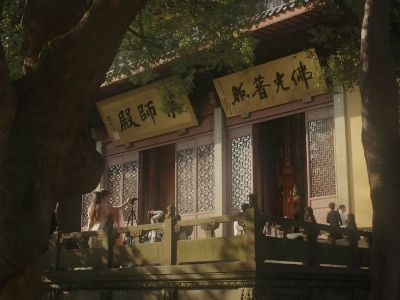
Lingyin Temple is the legendary home of Ji Gong and one of China's most sacred Buddhist temples. It's not just walking—it's about praying properly and feeling the peace.
Prayer Guide (What to Pray For in Each Hall)
You can follow a traditional path and make wishes at different halls, each associated with a different blessing:
Hall of the Heavenly Kings:
Pray for peace and safety
Houses Maitreya Buddha
Grand Hall:
Pray for career and life direction
The spiritual center of the temple
Medicine Buddha Hall:
Pray for health and longevity
You can touch the "fortune stone" here
Huayan Hall:
Popular among students
Pray for academic success
Five Hundred Arhats Hall:
Known for relationship and destiny wishes
Many believe it's especially "accurate"
Worship Etiquette (Important Details)
When making a wish:
· Say your name and where you're from
· Be clear and sincere
Don't:
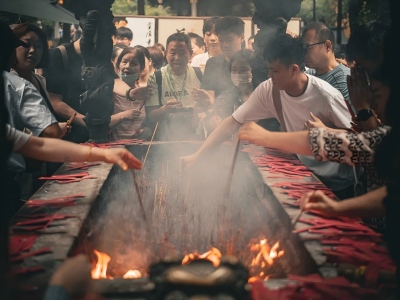
· Blow out incense with your mouth (wave it gently instead)
· Step on door thresholds
· Take photos directly of Buddha statues
Temple Souvenirs (Updated 2026 — What You Should Know)
If you're planning to get a bracelet or temple souvenir at Lingyin, there's an important update most guides haven't caught up with yet.
Major Change (Since 2025)
As of recent adjustments, the temple has significantly reduced its souvenir distribution areas.
Available only at:
Entrance area (near the Hall of Heavenly Kings)
Exit area (near Huayan Hall)
Opening Hours
7:30 AM – 5:30 PM
Last entry aligns with temple hours (~5:00 PM)
The most popular item is still: "18-bead bracelet" (十八籽), around ¥46 per string.
Simple, symbolic, and widely chosen by visitors.
Local Insight:
If you're planning to get a bracelet, don't wait until the end of your visit. Exit areas can get crowded, and some items may run low later in the day
Vegetarian Food Inside the Temple
Near the entrance, you'll find simple vegetarian dining options:"十方苑" vegetarian noodles (famous longevity noodles), around ¥20 per bowl.
Note: It may be temporarily closed for renovation. Alternative nearby:"知竹手工素面" — a good backup option
What It Feels Like at Different Times
Morning: quiet, you may hear chanting
Midday: crowded, strong incense smell, noisy
Late afternoon: fewer people, calmer but some areas close
Local Tip: The main hall is almost never truly quiet unless you go very early.
Cultural Etiquette
· Dress modestly (shoulders and knees covered)
· Don't point cameras directly at people praying
· Keep your voice low
· Don't sit or step on sacred platforms
Best Time to Visit & Avoid Crowds
Most guides will tell you: "Go early to avoid crowds." That's not wrong — but it's also not enough. At Lingyin, timing isn't just about crowds. It affects the light, atmosphere, smell, and even how the place feels.
Best Time of Day
7:30–9:00 → Best Balance
This is the best balance of everything:
· Crowds are still light
· Most areas are open
· Light is soft (great for photos, especially in Feilai Feng)
· Incense smell is present, but not overwhelming
This is when the place still feels calm, not rushed.
After 16:30 → Underrated Option
Most tour groups leave by late afternoon.
What changes:
· Noticeably fewer people
· Slower pace inside the temple
· Quieter paths in Feilai Feng
The trade-off:
· Some halls may start closing
· Less time to explore everything
Best for: Travelers who prefer atmosphere over "seeing everything"
Worst Time to Visit (Avoid If Possible)
10:00 AM – 3:00 PM: This is peak congestion.
· Tour groups arrive
· Entrance and main halls get crowded
· Photo spots are packed
· Noise level increases significantly
The incense smoke also builds up around midday, making the air feel heavier.
Weather Matters More Than You Think
Rainy / Foggy Days → Surprisingly Better, this is where most people get it wrong.
· Fewer visitors
· Mist around Feilai Feng adds atmosphere
· Stone carvings look more dramatic
· Overall experience feels more "Zen"
Counterintuitive but true:
A slightly gloomy day often feels more authentic than a sunny one.
Sunny Days → Better for clear photos
But also:
· More tourists
· Harsher light (especially at noon)
Seasonal Tips
Spring (Mar–May): comfortable, slightly crowded
Autumn (Sep–Nov): best balance overall
Summer: hot, humid, but lush greenery
Winter: fewer people, quieter, more local feel
Important mindset shift: Fewer people often means a better experience — not a worse one.
Common Tourist Mistakes to Avoid
Most people don't have a bad experience at Lingyin Temple because the place is disappointing. They have a bad experience because of a few very specific — and very avoidable — mistakes. If you understand these, your visit will feel completely different
1. Going Straight to Lingyin Temple and Skipping Feilai Feng
This is by far the most common mistake. Many visitors enter the scenic area and head directly into the temple, thinking that's the "main attraction." They spend 30–40 minutes inside, then leave — often feeling like it was crowded and not particularly memorable.
2. Visit at noon (most crowded)
From 10 AM to 3 PM, large tour groups flood every path. The temple is noisy, incense smell is overwhelming, photo spots are packed, and you can barely walk slowly. Even if you love crowds, this time slot destroys the peaceful, spiritual vibe Lingyin is famous for. No matter how tight your schedule is, avoid noon at all costs.
3. Thinking "Rainy Days Are Bad" & Missing the Best Atmosphere
A lot of travelers cancel or rush their trip if it rains. But rainy or misty days are the best-kept local secret. The mountains are foggy, the air is fresh, crowds disappear completely, and Feilai Feng looks like a traditional Chinese painting. Fewer people do NOT mean a worse experience — in fact, it means a more magical one.
4. Forgetting to Reserve in Advance & Being Turned Away
Since December 1, 2025, Lingyin Temple and Feilai Feng are free but reservation-only. Many tourists show up without booking and get rejected at the gate, especially on weekends, holidays, and golden weeks. Same-day reservations are almost impossible. You must book 1–7 days early via the official mini-program at 8:00 AM sharp. No reservation = no entry. Don't let this ruin your day.
5. Ignoring Traffic Control & Getting Stuck in Jam for Hours
Roads near Lingyin are extremely narrow. Traffic control starts at 8:00 AM — taxis and Didi can NOT enter the core area after 8 AM. Tourists who don't know this set their destination directly to "Lingyin Temple" after 8 AM, only to be dropped 2–3 km away and forced to walk in hot sun. Always use the correct parking lots and shuttle bus after 8 AM, or arrive before 8 AM.
6. Wearing Inappropriate Shoes & Clothing
Shoes: The area has many stone steps, which get slippery in the morning or after rain. Sandals, flip-flops, and smooth-soled shoes increase your risk of falling.
Clothing: As a sacred Buddhist temple, Lingyin requires modest dress. Sleeveless tops, short shorts, or miniskirts are disrespectful and may make you feel uncomfortable. Proper, covered clothing also helps you stay calm and focused.
FAQ
1. How long does it take to visit Lingyin Temple?
2–4 hours depending on pace.
2. Can I visit without a guide?
Yes. The route is straightforward.
3. Is Lingyin Temple worth visiting?
Yes—especially if you also explore Feilai Feng.
4. What should I wear?
Modest, covered clothes; non?slip walking shoes.
5. Can I take photos inside Lingyin Temple?
Yes, in open areas, but no photos of Buddha statues.
6. Can foreigners make a reservation on the mini?program?
Yes. The official "杭州灵隐飞来峰" mini?program supports passport registration. Just fill in your passport information and select your time slot.
7. Is Lingyin Temple stroller/wheelchair friendly?
Most areas have stone steps and slopes, so strollers and wheelchairs are not convenient. Feilai Feng has many uneven paths; it's better to use a baby carrier instead.
8. Can I bring food or drinks into the scenic area?
Yes, you can bring simple water and snacks. But no picnics on sacred grounds, and please take your trash away to keep the area clean.
Visiting Lingyin Temple and Feilai Feng is never about checking boxes or racing through crowds. It's about slowing down to feel the ancient Zen energy, admire the thousand?year stone carvings, and breathe in the quiet mountain air. To truly experience this place like a local: Arrive early, walk deep into Feilai Feng first, respect the culture, and don't rush. You'll walk away with more than photos — you'll walk away with a calm heart and memories most tourists never get. If you follow this guide, your trip to Lingyin Temple and Feilai Feng will be peaceful, smooth, and truly unforgettable.